
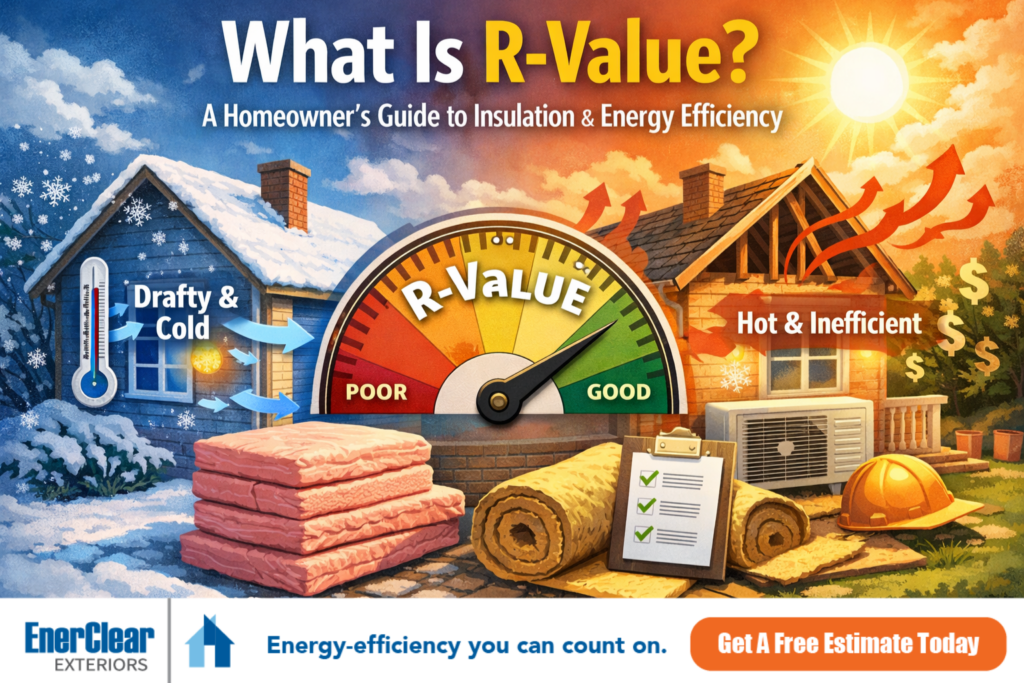
If your home feels drafty in winter, overheats in summer, or costs more than expected to heat and cool, the issue often comes down to one thing: poor r-value performance.
You don’t need to be a construction expert to understand this. With a few simple concepts, you can make smarter exterior renovation decisions that actually improve comfort, durability, and energy efficiency .
What Is R-Value?
R-value measures how well a material resists heat flow. In simple terms, it explains the r value of insulation and how effectively it slows heat movement through your home.
- Higher r values = better insulation
- Lower r values = heat moves through more easily
In colder months, heat naturally tries to escape your home.
In warmer months, outdoor heat tries to move inside.
A higher insulation r value slows that heat movement, helping your home stay more comfortable year-round while reducing energy costs.
There’s no single “perfect” number. The right r value insulation depends on your climate, your home’s design, and where insulation exists within the exterior building envelope.
Why R-Value Alone Isn’t the Whole Story
Many homeowners assume adding more insulation automatically solves comfort issues. In reality, r-value only works when the home’s exterior is properly sealed and protected.
Air leaks, moisture intrusion, and poor exterior detailing can allow heat to bypass insulation entirely. That’s why real-world performance often falls short of what insulation labels promise.
Where R-Value Really Comes From
Here’s an important truth supported by building science and energy-efficiency research:
“Insulation creates r-value — but exterior systems determine whether that r-value actually performs.”
Different insulation materials provide different r values, which is why thickness and proper installation both matter. Even high-rated insulation won’t work as intended if air or moisture can move around it.
This is also why tools like an r-value insulation chart are useful for comparison — but they don’t guarantee real-world performance on their own.
How Exterior Components Affect R-Value
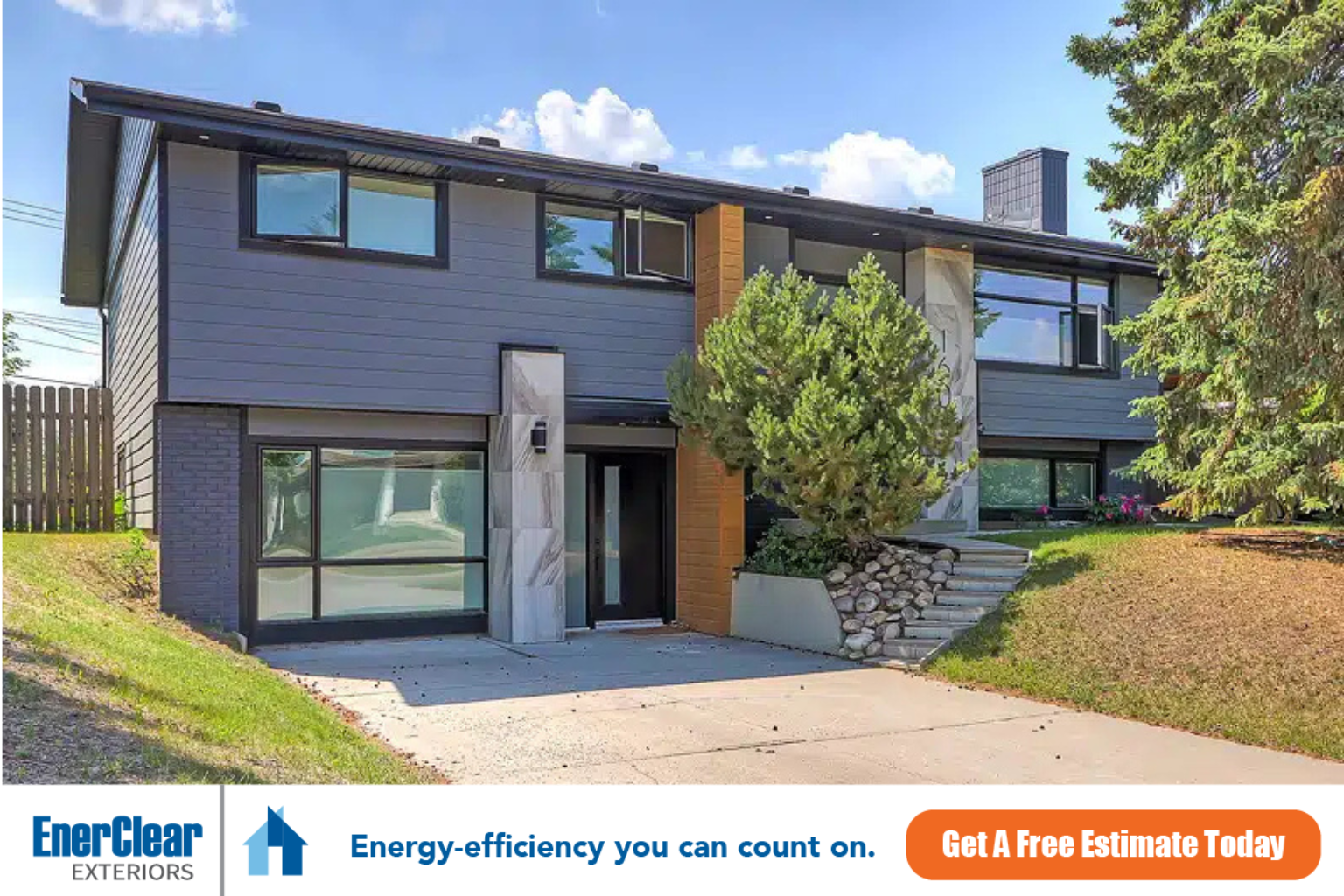
Windows & Doors
Windows and doors are among the largest sources of heat loss in homes. While insulation is rated by r-value, windows are usually rated by U-value, which measures how quickly heat escapes. The idea is the same: less heat loss means better energy efficiency.
Proper installation and airtight sealing around frames play a major role in overall performance.
Siding
Siding doesn’t add much insulation on its own, but it plays a major role in:
- blocking wind
- protecting insulation from moisture
- supporting insulated wall systems behind it
When installed correctly, siding helps insulation maintain its designed insulation r value over time.
Roofing
Roofing is a critical exterior layer that protects the insulation beneath it. While roofing materials don’t add r-value themselves, proper installation helps prevent moisture intrusion, wind uplift, and long-term insulation degradation.
Poor roofing can significantly reduce how well insulation performs over time.
Additional Exterior Elements That Protect R-Value
Some exterior features don’t add insulation, but they play an important role in protecting it:
Stucco & Stonework
These materials are durable and visually striking, but they are not insulating. Their job is to protect the insulated wall system behind them. Drainage layers, air gaps, and sealed transitions are essential to prevent moisture-related performance loss.
Rainware (Soffit, Fascia & Eavestrough)
Rainware manages water, supports airflow, and seals roof edges. Keeping insulation dry is critical — wet insulation can lose a significant portion of its r value of insulation.
Decorative Timber Accents
Timber accents add warmth and character but must be installed without breaking insulation layers or creating air leaks. Proper sealing ensures these features don’t reduce energy performance.
Exterior Foundation Walls & Transitions
The areas where walls meet foundations, roofs, and openings are common places for heat loss. Proper exterior detailing and sealing at these transitions help maintain continuous insulation performance.
Why Installation Quality Matters So Much
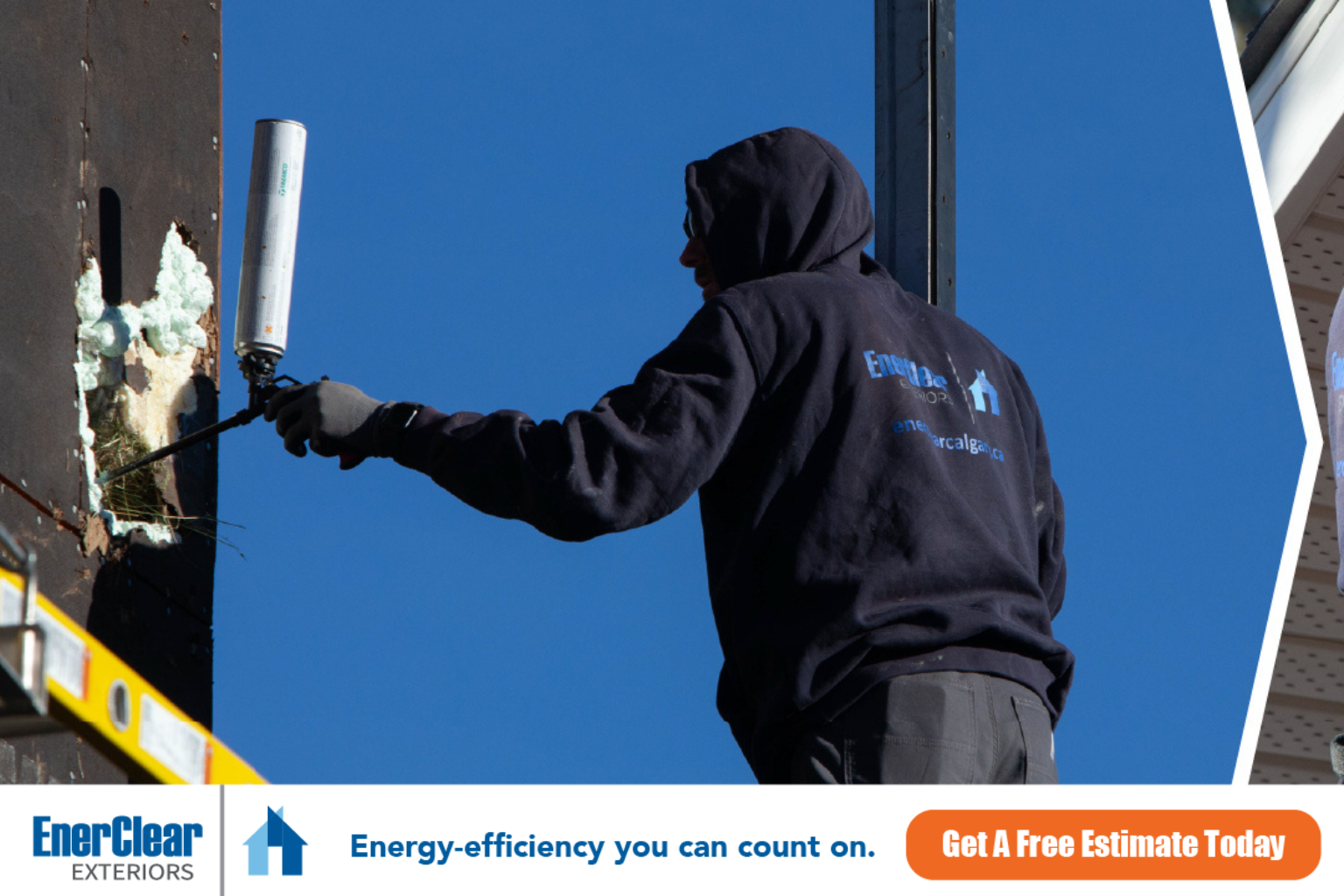
A key takeaway from energy-efficiency research is this:
“Adding more insulation alone doesn’t solve comfort problems if air leaks and moisture issues remain.”
Even high-quality insulation can lose 30–40% of its real-world performance if exterior sealing and detailing are poor. Insulation only keeps its r-value long-term when it’s kept dry, sealed, and protected from the elements.
The Big Picture
- R-value measures resistance to heat flow
- Insulation creates r-value
- Exterior systems protect and preserve it
- Details and installation quality make the difference
When exterior upgrades are planned with energy performance in mind, homeowners see better comfort, lower energy bills, and longer-lasting results.
If you’re planning exterior renovations and want them to improve more than just appearance, working with an exterior specialist who understands how insulation, air sealing, and exterior systems work together makes all the difference.
That’s where EnerClear Exteriors helps bring everything together — aligning windows, doors, siding, roofing, stucco, stonework, rainware, and exterior detailing into one coordinated system focused on long-term comfort, durability, and efficiency.